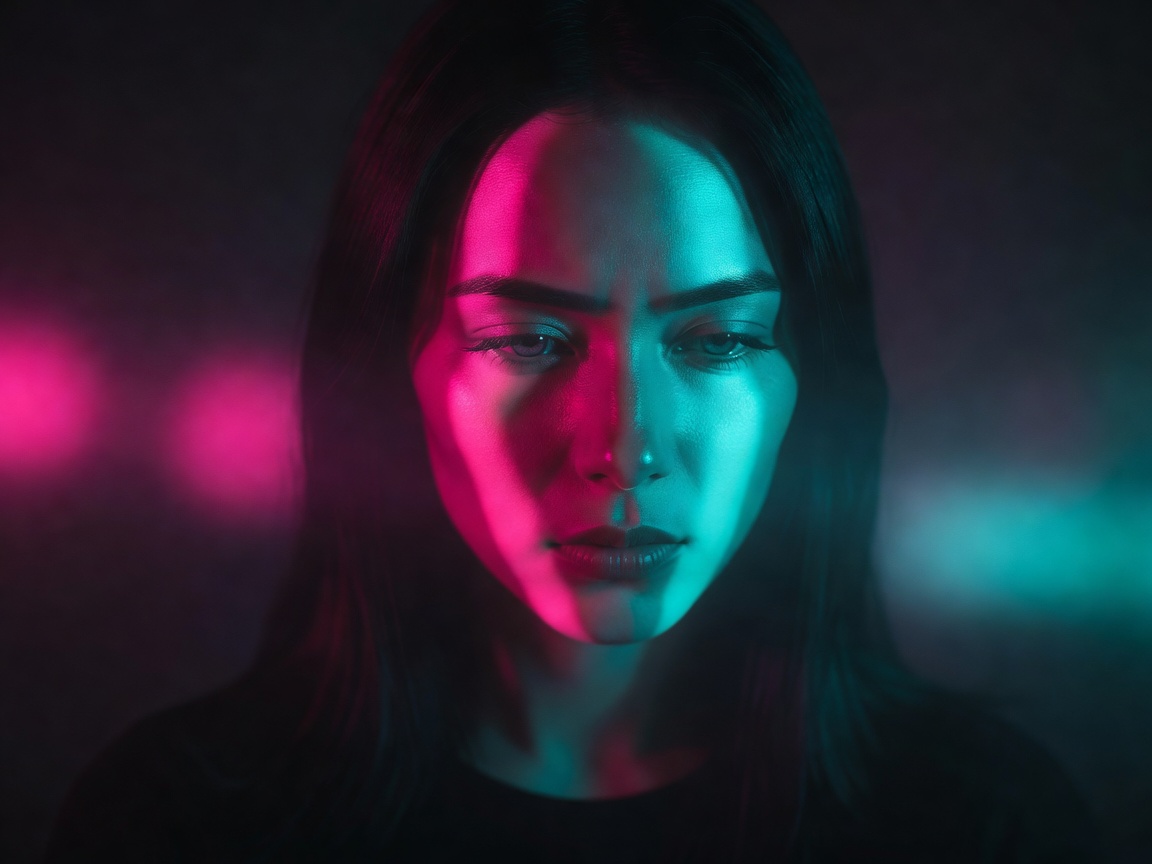
The Transition from Strobe to Continuous
For decades, professional photography relied almost entirely on high-powered strobe flashes combined with physical colored gels to achieve dramatic lighting setups. While strobes still dominate high-speed commercial work, the rapid advancement of continuous RGB LED technology has revolutionized modern portraiture, music video production, and content creation.
Continuous lighting offers a "what you see is what you get" workflow. Photographers can visually balance multiple color sources, adjust intensity on the fly, and see precisely how a shadow falls across a subject’s face before even looking through the viewfinder.
Color Science: CRI and TLCI Explained
When selecting RGB lights for camera work, sheer brightness is secondary to color accuracy. Camera sensors interpret light differently than the human eye. An inferior LED might look perfectly white to you, but the camera may capture a sickly green cast that is incredibly difficult to fix in post-production.
Professional fixtures are evaluated using two primary metrics:
- CRI (Color Rendering Index): Evaluates how accurately a light source reveals true colors compared to a natural light source. For photography, a CRI of 95+ is considered the minimum standard.
- TLCI (Television Lighting Consistency Index): A more modern metric specifically designed to evaluate how light behaves when captured by electronic camera sensors rather than the human eye. TLCI scores above 95 ensure skin tones remain natural and post-production color correction is minimized.
Form Factors and Practical Applications
The versatility of RGB lighting for creative work comes down to the diverse array of form factors available to creators today.
Pocket RGB Panels
Small, battery-powered LED panels the size of a smartphone are arguably the most versatile tools in a modern creator's kit. Due to their low profile, they can be hidden behind props to provide localized accent lighting, mounted on-camera for run-and-gun documentary work, or used for light painting during long exposure photography. Despite their size, premium models output impressive brightness and feature built-in magnetic backs for rapid mounting.
RGB Tube Lights (Wands)
Tube lights have become synonymous with modern cinematic lighting. Their elongated shape provides a naturally softer wrap-around light compared to small point-source panels. They are frequently used as "practical lights" (lights visible within the camera frame) in music videos or sci-fi shoots, providing both illumination and set design simultaneously. Their geometry also produces long, linear catchlights in a subject's eyes, which is a highly sought-after aesthetic in beauty and fashion photography.
High-Output COB (Chip on Board) Lights
When serious output is required—such as mimicking sunlight shining through a colored stained-glass window—creators turn to RGB COB lights. These massive fixtures combine hundreds of diodes into a dense cluster and are modified with heavy softboxes or fresnel lenses. They form the backbone of professional key lighting setups.
Advantages of RGB LEDs
- No Gels Required: Infinite color options without carrying fragile, heat-sensitive colored plastic sheets.
- Built-in Effects: Pre-programmed sequences can simulate police lights, flickering candles, or a glowing television screen for video production.
- App Control: Gaffer apps allow adjusting intensity and color values of multiple lights from a single tablet.
Limitations to Consider
- Output Power: Continuous RGB LEDs cannot freeze fast motion or compete with the midday sun as effectively as strobe lighting.
- Battery Management: Sustained high output drains batteries rapidly, requiring heavy V-mount batteries for location shoots.
- Flicker Rates: Cheaper fixtures utilize low-frequency Pulse Width Modulation (PWM) dimming, which introduces visible banding or flickering when shooting video at high frame rates.