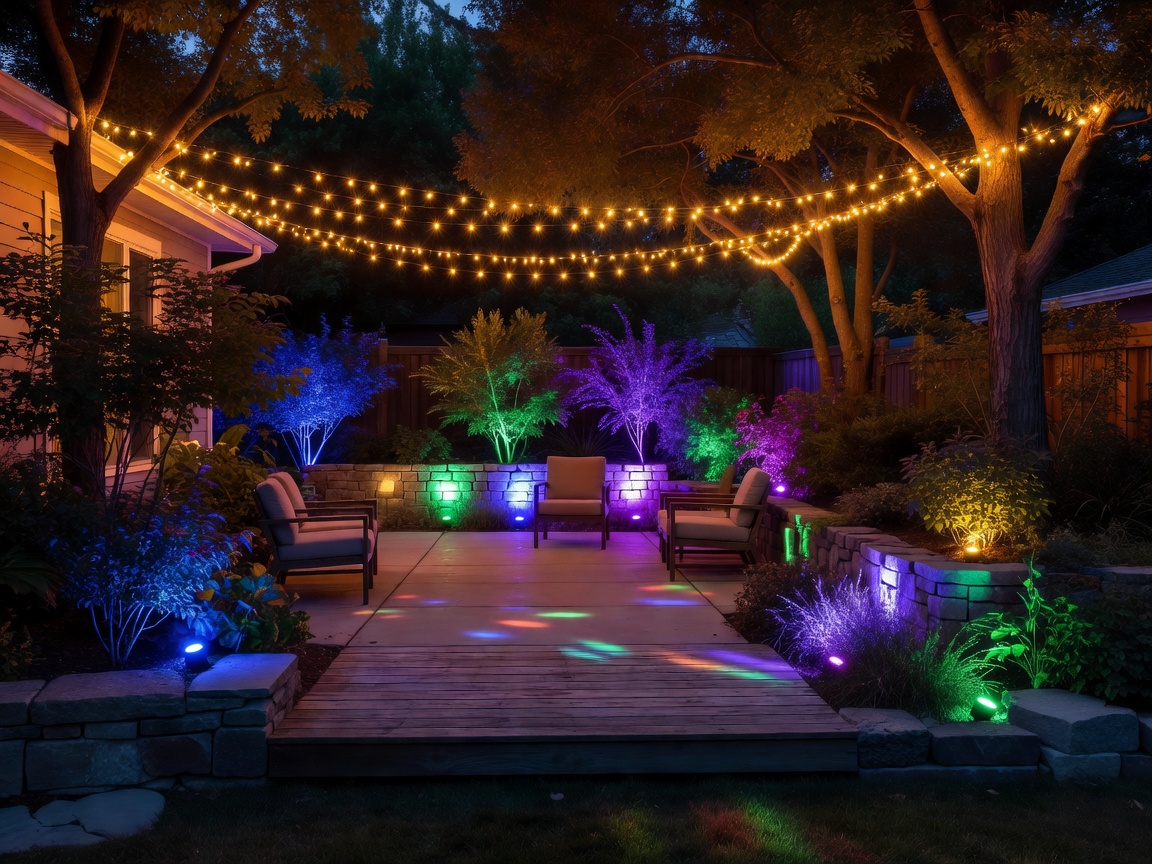
The Elements of Exterior Illumination
Taking RGB lighting outdoors introduces a host of engineering challenges that simply do not exist inside a temperature-controlled gaming room. Fluctuating temperatures, UV radiation, moisture, and massive cable runs require specialized hardware and careful planning. Done correctly, exterior RGB can replace seasonal holiday lights entirely and dramatically enhance the curb appeal of a property.
Demystifying IP Ratings
The foremost consideration for any outdoor installation is the Ingress Protection (IP) rating of the hardware. The two digits in an IP rating signify resistance to solids (first digit) and liquids (second digit).
- IP20 / IP33: Suitable only for indoor use. No meaningful moisture protection.
- IP65: Protected against dust ingress and low-pressure water jets from any direction. Often coated in a thin layer of silicone or polyurethane. Suitable for covered patios or under soffits where direct, standing water is unlikely.
- IP67: Protected against dust and capable of withstanding temporary immersion in water. These strips are typically housed in a hollow silicone extrusion. Essential for exposed fencing, pergolas, or landscape bordering.
- IP68: Capable of continuous immersion. Required for swimming pools, fountains, and deeply submerged pond lighting.
Crucially, an IP rating only applies to the continuous strip itself. The moment a strip is cut to size, the exposed ends are incredibly vulnerable to moisture. Cut ends must be resealed meticulously with silicone end-caps and marine-grade heat shrink to maintain weather resistance.
Navigating Voltage Drop
Outdoor installations typically involve much longer cable runs than interior setups. This exacerbates a fundamental law of physics known as voltage drop. As electrical current travels through the resistance of copper wire over long distances, the voltage steadily decreases.
In a standard 5V or 12V RGB strip run across 10 meters, the diodes at the end of the strip will receive significantly less voltage than the diodes nearest the power supply. The visual result is a strip that begins bright white but fades to a dim orange or red at the tail end.
Mitigation Strategies:
- Power Injection: Running a thicker, parallel gauge wire alongside the data line and splicing it into the RGB strip every 5 meters to restore full voltage.
- 24V Systems: Utilizing 24V hardware instead of 12V. Higher voltage pushes through resistance much more efficiently, allowing for longer continuous runs before injection is necessary.
- Centralized Hubs: Utilizing low-voltage transformers centrally located in the yard, running thick landscape wire out in a star-topology rather than daisy-chaining everything end-to-end.
Permanent Architectural Track Lighting
One of the fastest-growing sectors of outdoor RGB is permanent architectural lighting. Instead of stringing up holiday lights annually, custom aluminum tracks are mounted permanently beneath the eaves and soffits of a house. Addressable puck lights or strips face downward, washing the walls in light.
During the year, these can be set to a warm 3000K white for elegant architectural security lighting. During holidays or events, the programmable IC chips allow the entire perimeter of the home to execute chasing color patterns, synchronized completely via smart home applications.
Best Practices
- UV Resistance: Ensure all diffusers and silicone coatings are rated for UV resistance to prevent yellowing over time in the sun.
- Waterproof Connectors: Use IP67-rated pigtail connectors (like xConnect or Ray Wu) rather than standard push-pin headers.
- Wi-Fi Range: Outdoor controllers often fall outside the range of a standard home router. Consider deploying outdoor wireless access points.
Common Failures
- Thermal Cycling: Cheaper adhesives fail outdoors due to expanding and contracting materials. Always use physical mounting clips.
- Water Ingress at Supply: Placing the power supply directly on the ground. Transformers should be elevated and housed in NEMA-rated weatherproof enclosures.